FlipGrid makes it easy for you to record video instructions, share resources, hyperlink to important resources and tools, emphasize key points, and increase student accountability. Learn how to do that, as well as some tools for making your plans accessible to students, your sub, other teachers, and parents!

Showing posts with label video. Show all posts
Showing posts with label video. Show all posts
Learning Shouldn't Stop When You are Sick: Use FlipGrid for Sub Plans
Learning shouldn't have to stop when you are sick! Why not use FlipGrid to house your sub plans?
FlipGrid makes it easy for you to record video instructions, share resources, hyperlink to important resources and tools, emphasize key points, and increase student accountability. Learn how to do that, as well as some tools for making your plans accessible to students, your sub, other teachers, and parents!
FlipGrid makes it easy for you to record video instructions, share resources, hyperlink to important resources and tools, emphasize key points, and increase student accountability. Learn how to do that, as well as some tools for making your plans accessible to students, your sub, other teachers, and parents!

5 Ways to Make Your Pictures Speak a 1,000 Words
Students in our classrooms are highly variable in the way they learn and interact in learning environments. Many of our students love the power of images and video to learn. With this in mind, we will investigate the question: How do you make your pictures speak a thousand words?
Here are five ideas:

1. Google Drawings
I love Google Drawings, yet I believe it is the most underutilized Google App with the most potential. Students can use Google Drawings to label images, create graphic organizers, mind maps, etc.
David Garcia came up with a very cool idea. Why not create a Google Drawing and use it as an interactive worksheet? David designed a math activity, where students can make a copy of the drawing and use the image of a protractor to measure and draw angles.

2. Explain Everything with Explain Everything
A good friend of mine teaches a unit on genetics. He found that students can fill out a worksheet, but often struggle with explaining why they wrote what they wrote. He decided to have his students take a picture of his genetics worksheet and import it into the Explain Everything App on iPads.
Students would record their voices and write on the image of the worksheet. When they were finished, they would send it to their teacher. Now he was to see and hear his student thought process.
3. Address Frequently Asked Questions with Screencasting
Every classroom contains students who need a little extra help, have frequently asked questions, or need the ability to rewind and listen to content again. Screencasting offers a great solution to address these questions or offer brief tutorials for students.
I enjoy using a free website called Screencastomatic to create brief videos for students. Not only does it offer the option to publish to YouTube or Screencastomatic, the recording places a yellow halo around your cursor to make it easier to track. If you are a Chromebook school, there are other tools like Screencastify or Snagit.
4. The Problem with Homework

Kim Meldrum found that many of her students did not complete homework assignments because they did not understand the assignment and / or had no help. In fact, a recent survey by EdWeek found that 46.5% of parents struggle with understanding how to help their child complete their homework. Kim came up with a great solution, record a brief screencast to describe the assignment and uploaded it to her YouTube channel. She found other videos to add to the channel to help elaborate on concepts.
5. Where are you Posting?
Whether you are flipping your classroom or creating brief tutorials, where you post your videos makes all of the difference! How can you make video presentations accessible to students who are deaf (without spending hours trying to come up with a transcript)? If you publish your video to YouTube, you can use the automatic Closed Captioning feature!
Conclusion:
Regardless of the device or tools you use, there are many other ways to make your pictures speak a thousand words. I just listed a few! In fact, I developed an entire framework to leverage the power of images and videos. Check this out below:

Here are five ideas:

1. Google Drawings
I love Google Drawings, yet I believe it is the most underutilized Google App with the most potential. Students can use Google Drawings to label images, create graphic organizers, mind maps, etc.
David Garcia came up with a very cool idea. Why not create a Google Drawing and use it as an interactive worksheet? David designed a math activity, where students can make a copy of the drawing and use the image of a protractor to measure and draw angles.

2. Explain Everything with Explain Everything
A good friend of mine teaches a unit on genetics. He found that students can fill out a worksheet, but often struggle with explaining why they wrote what they wrote. He decided to have his students take a picture of his genetics worksheet and import it into the Explain Everything App on iPads.
Students would record their voices and write on the image of the worksheet. When they were finished, they would send it to their teacher. Now he was to see and hear his student thought process.
3. Address Frequently Asked Questions with Screencasting
Every classroom contains students who need a little extra help, have frequently asked questions, or need the ability to rewind and listen to content again. Screencasting offers a great solution to address these questions or offer brief tutorials for students.
I enjoy using a free website called Screencastomatic to create brief videos for students. Not only does it offer the option to publish to YouTube or Screencastomatic, the recording places a yellow halo around your cursor to make it easier to track. If you are a Chromebook school, there are other tools like Screencastify or Snagit.
4. The Problem with Homework

Kim Meldrum found that many of her students did not complete homework assignments because they did not understand the assignment and / or had no help. In fact, a recent survey by EdWeek found that 46.5% of parents struggle with understanding how to help their child complete their homework. Kim came up with a great solution, record a brief screencast to describe the assignment and uploaded it to her YouTube channel. She found other videos to add to the channel to help elaborate on concepts.
5. Where are you Posting?
Whether you are flipping your classroom or creating brief tutorials, where you post your videos makes all of the difference! How can you make video presentations accessible to students who are deaf (without spending hours trying to come up with a transcript)? If you publish your video to YouTube, you can use the automatic Closed Captioning feature!
Conclusion:
Regardless of the device or tools you use, there are many other ways to make your pictures speak a thousand words. I just listed a few! In fact, I developed an entire framework to leverage the power of images and videos. Check this out below:

Tell Your Story One Frame at a Time with Lego Movie Maker
Video is a powerful teaching and learning tool for our students. As devices becoming increasingly more mobile, there are many Apps available for our students to create powerful multimedia projects. I recently read a survey that suggests that 2/3 of American adults consider themselves to be visual learners.
This is why the popularity of social media posts increases when a picture is attached. It is why many of our students find watching and creating images and videos so powerful.
Lego Movie Maker:

Lego Movie Maker is a free iOS App that makes sharing and telling your story extremely easy. Do you remember the days of claymation? Lego Movie Maker uses the same principles of claymation to combine your iPad and the power of image, as you tell your story frame by frame.
Whether you are using Lego figurines or using objects (or people) around your room, this App is extremely easy to use. Students who are avid movie producers and those with very little experience can easily publish, edit, and create captivating movies that tell a story.
Conclusion:
Do you use video in your classroom? If so, I'd love to hear about your favorite tools.
This is why the popularity of social media posts increases when a picture is attached. It is why many of our students find watching and creating images and videos so powerful.
Lego Movie Maker:

Lego Movie Maker is a free iOS App that makes sharing and telling your story extremely easy. Do you remember the days of claymation? Lego Movie Maker uses the same principles of claymation to combine your iPad and the power of image, as you tell your story frame by frame.
Whether you are using Lego figurines or using objects (or people) around your room, this App is extremely easy to use. Students who are avid movie producers and those with very little experience can easily publish, edit, and create captivating movies that tell a story.
Conclusion:
Do you use video in your classroom? If so, I'd love to hear about your favorite tools.
Subscribe to:
Posts (Atom)
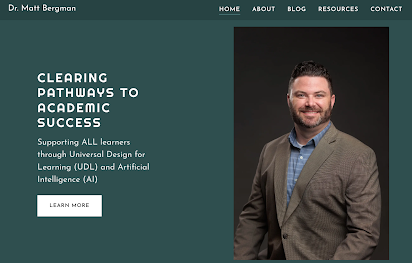
New Learn Lead Grow Home!
Hello readers! Happy New Year! It’s hard to believe that 15 years have passed since I launched my Learn Lead Grow blog. As we step into a n...
-
 Hello readers! Happy New Year! It’s hard to believe that 15 years have passed since I launched my Learn Lead Grow blog. As we step into a n...
 -
 If you are like me, you spend a lot of time browsing through different articles on the Internet and want a solution for revisiting them when...
 -
Unpacking academic standards is a helpful practice to ensure students have the clarity they need to succeed. It also helps us better prepare...
